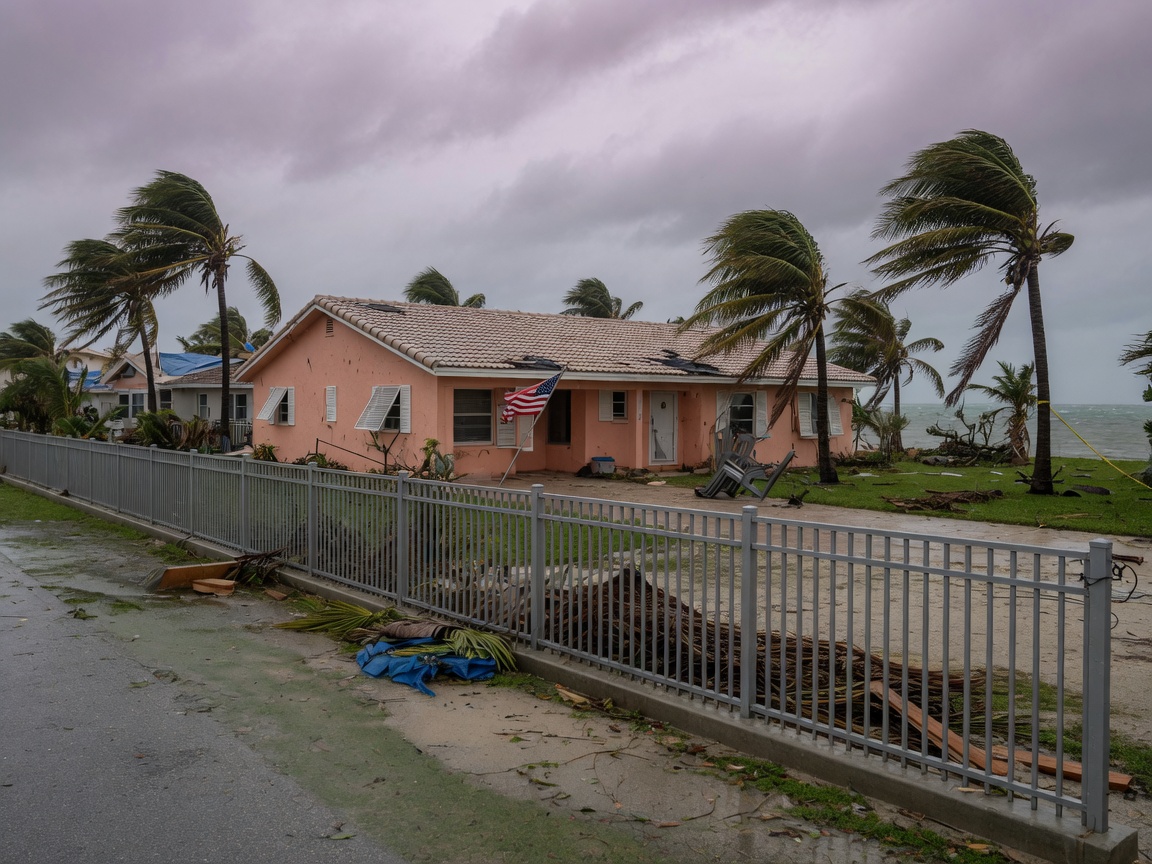
Everyone on this coast has driven past it the week after a storm: block after block of fencing leaning at the same angle, or panels missing entirely while the posts on either side stand fine. Fences here take a beating that inland fences never see, and the difference between one that survives storm season and one that ends up in the neighbor's yard usually comes down to a handful of choices made before a single post goes in the ground.
The 2004 storm Ivan and Hurricane Sally in 2020 both hit the area hard, and every property owner who lived through them knows fences are among the first things to go. This guide is about making yours one of the ones still standing, not with marketing gimmicks, but with the material and construction decisions that actually matter. We build here because this coast punishes shortcuts, so honest work shows.
What Wind Actually Does to a Fence
A fence is a wall the wind wants to push over. The taller and more solid it is, the more force it catches, which is why a six-foot solid privacy fence takes far more load than an open picket or a chain link run. Wind does not treat a fence as one object either. It finds the weakest joint and works there, so the way a fence fails in a storm is rarely random. It follows the surface area and the fasteners, and knowing the three failure modes below tells you exactly what our crews reinforce before we ever build.
The Three Ways a Fence Fails in Wind
Almost every storm-damaged fence we are called out to look at failed in one of three ways, and each one points back to a specific construction decision made long before the storm arrived.
Posts lean or snap
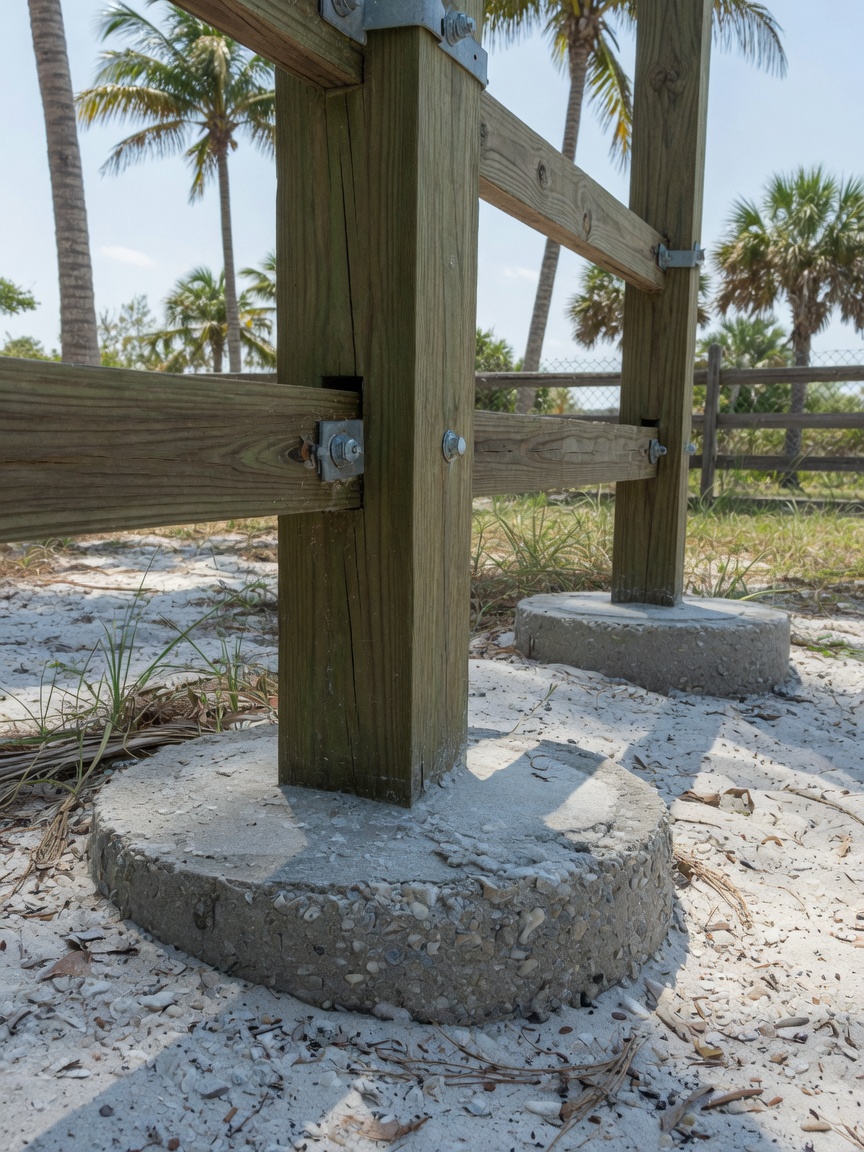
The post is the fence's spine. If it is set too shallow, in too little concrete, or in ground that turns to soup after heavy rain, the whole run tips. Most storm-leaned fences are a post-setting failure, not a panel failure, which is why our crews spend more time on the hole than on the pretty part.
Depth beats everything
A post set to a proper depth in a wide footing resists both the sideways push of the wind and the softening of saturated sand underneath it. Shave the depth to save a few dollars per hole and you have quietly built the failure in.
Good to know
The post hole is the one part of the job you cannot inspect once the concrete cures, so it is also the easiest place for a cut-rate bid to hide. Ask how deep before, not after.
Panels lift or blow out
Wind gets under and behind solid panels and pries them loose at the fasteners. A panel that is only tacked on peels off long before the posts give up. Some builders deliberately design privacy fences with a small gap between boards so wind passes through instead of pushing against a sail, trading a little privacy for a lot of storm tolerance.
Gates fail first
Gates carry the moving parts, the hinges, latches, and a frame that flexes, so they are the weakest point in almost every fence. A gate that was already sagging before the storm is the first thing to tear loose in one. Con hates a leaning gate more than almost anything, so our crews brace and square every gate rather than hanging it and hoping.
How Each Fence Material Handles a Storm
There is no single "hurricane-proof" fence, but the materials behave differently enough that the choice matters on the coast. The honest way to think about it is surface area versus corrosion resistance. A solid material screens your yard but catches wind like a sail, while an open material shrugs off wind but hides nothing. Here is how each of the four we build stacks up.
 Wood and privacy fences
Solid wood privacy fences catch the most wind of any common style, because they are literally a wall. That makes post depth and spacing the whole game. Well-built, a heavy wood fence is stout; poorly built, its own surface area works against it. Water is the slower enemy: saturated ground loosens posts, and repeated wet-dry cycles are hard on the wood itself over time.
What carries a wood fence through a blow
Closer post spacing, deeper footings, and rails that are fastened rather than merely nailed are what let a solid wood run take a storm. The boards themselves are the least of it. The frame underneath is what stands or falls.
 Vinyl and composite
Vinyl does not rot or corrode, which is a real advantage in a hot, humid coastal climate. In wind, quality matters more than the material name, because heavier-wall vinyl with properly reinforced posts holds up while thin, hollow panels can crack or pop out of their rails. Like wood, a solid vinyl privacy panel is a sail, so the post and rail engineering underneath is what carries it.
Wall thickness is the tell
Two vinyl fences can look identical on install day and behave completely differently in a storm. The difference is the wall thickness of the panels and posts, and whether the posts are internally reinforced. That is the spec to ask about before you sign anything.
 Aluminum
Aluminum is the material that most directly answers the coast's two problems at once. Its open picket design lets wind pass through instead of catching it like a solid wall, and aluminum does not rust the way steel does when salt air is a constant. That combination is why it is the common recommendation for waterfront and near-water lots. If corrosion resistance is your main worry, start with aluminum fence quotes.
 Chain link
Chain link is quietly one of the more storm-tolerant fences precisely because it is mostly air. Wind blows straight through the mesh, so there is very little surface for a gust to push against. Galvanized chain link also resists corrosion reasonably well. It buys no privacy, but for wind survival per dollar it is hard to beat.
Salt Air and Corrosion
On the coast, the enemy that never takes a day off is not the storm. It is the salt air between storms. Metal fence components corrode faster near the water, and the parts that fail are almost always the small ones: fasteners, hinges, latches, and post caps. A fence can be perfectly sound in the panels and still fail because a corroded hinge let a gate tear loose.
Why the Hardware Conversation Matters More Here
This is why the hardware conversation matters more here than inland. Ask what the fasteners and gate hardware are made of and whether they are coated or corrosion-rated. Aluminum and galvanized components hold up better in salt air; bare or lightly-coated steel is the first thing to rust. It is an unglamorous detail that quietly decides how long a coastal fence lasts.
Humidity works alongside the salt
Salt gets the blame, but the near-constant humidity on this coast is what keeps metal wet long enough for the salt to do its work. The two together are why a fence a few blocks from open water can rust faster than the same fence built well inland.
Sandy soil adds a footing wrinkle
The sugar sand along the Panhandle drains fast but holds a post more loosely than dense clay does, so the footing has to do more of the work. A wider, deeper concrete collar is how our crews make sandy soil hold a post through a blow.
One more note
Loose sand also lets water travel to the base of a post quickly, so a footing that sheds water away from the post outlasts one that lets it pool.
The Post-and-Hardware Details That Decide Everything
If you take one thing from this guide, make it this: the fence you can see is only as good as the parts you cannot. Ask a contractor how deep the posts go, how they are set, and what the gate hardware is rated for. Those three answers separate a fence that shrugs off a storm from one that leans in the first strong blow:
- Post depth and setting. Deeper posts in adequate concrete resist both wind and the ground softening that follows heavy rain. This is the single biggest survival factor and the one most likely to be cut to shave a bid.
- Fastener and hardware grade. Corrosion-resistant fasteners and gate hardware are cheap insurance against the salt-air failure mode above.
- Gate reinforcement. Because gates fail first, a well-built, properly braced gate with solid hinges is worth paying attention to on the quote, itemized, not buried.
Florida's High-Wind Zone
The western Panhandle is a documented high-wind coastal area, and the storm history alone establishes that. Florida enforces wind-load requirements in its building code for exactly this reason, and fence permitting and construction standards vary by county and municipality. Rather than quote a specific design wind-speed number, the honest move is to build to the local code and pull the permit, so the fence meets the standard your zone actually requires. As a fence company in Gulf Breeze, FL, we handle that as part of the job.
Repair or Replace After a Storm?
When a storm does damage a fence, the fastest way to a straight answer is to price both a repair and a replacement. A few leaning posts or a blown-out panel often means a targeted repair; widespread damage across multiple sections usually means replacement is cheaper over the life of the fence. We will price the fix before we ever suggest a full teardown, which is exactly what our fence repair visit is for.
The Bottom Line
A storm-resistant fence on the Gulf Coast is not a special product you buy. It is an ordinary fence built right for this environment: posts set deep, hardware that resists salt-air corrosion, panels chosen with wind load in mind, and gates that are reinforced rather than afterthoughts. Aluminum and galvanized chain link tend to lead on pure wind survival; wood and vinyl can hold up well when the construction underneath them is done properly. The material is half the answer; the build is the other half.
When you are ready, show us the fence once and we will send you real numbers, built for this coast. Storm-season experience is the thing a national comparison chart cannot quote for you, and it is what fourteen-plus years of building through hurricane season buys.
Talk to us
Start on our fence company in Pensacola, FL or send us a quote request.
Coastal materials
See why aluminum leads near the water: aluminum & pool fences.
Storm damage
Already have a leaning or broken fence? We handle fence repair, same request.