Almost every backyard fence request that lands with our crew is really a request for privacy. People want to sit outside, let the dog run, or use the pool without the neighbors watching, and the word they reach for is "privacy fence." But there is no single product with that name stamped on it. A privacy fence is a category defined by what it does, not by a specific material, so it helps to know exactly what separates a private fence from an open one before you plan the build.
The Plain Definition
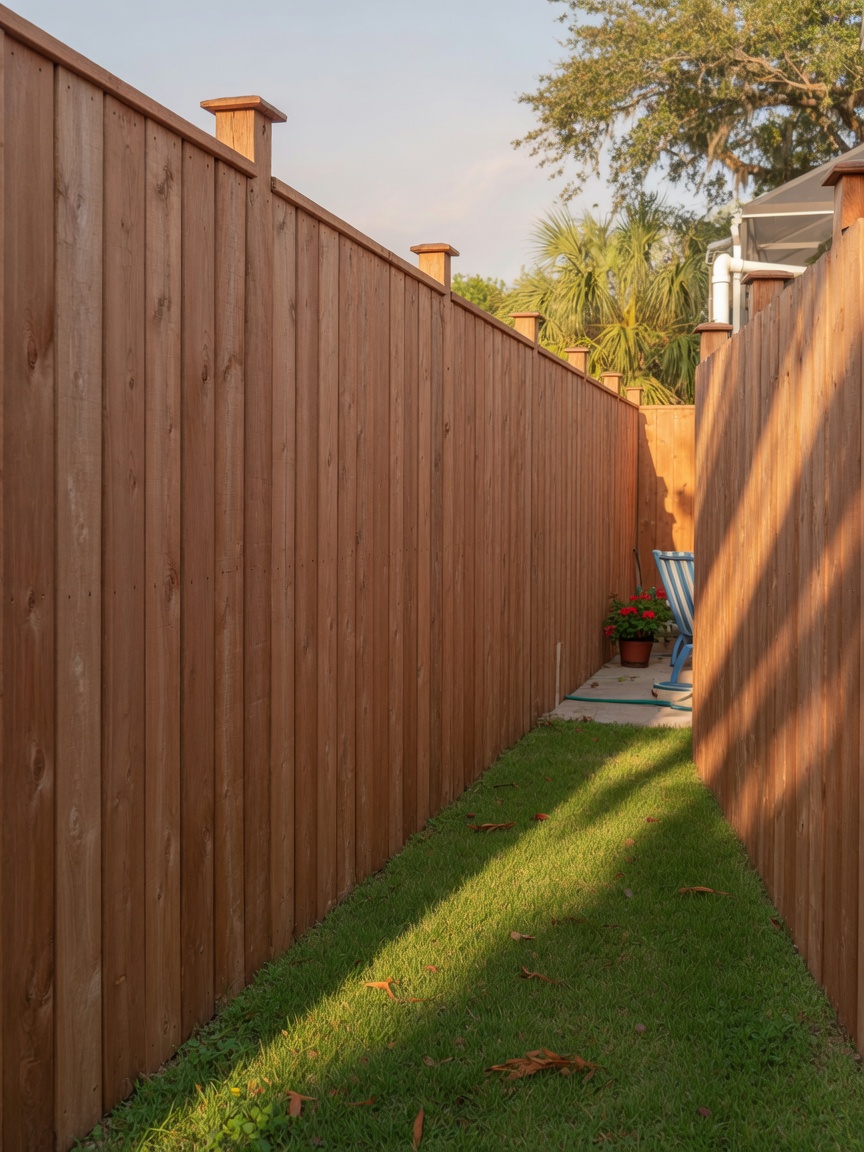
A privacy fence is a fence whose panels are tall enough and built without gaps, so that a person standing on the other side cannot see through it. That is the whole idea. Contrast it with a picket fence, which uses evenly spaced vertical boards with visible gaps between them, so a picket fence marks a boundary but hides nothing. A privacy fence closes those gaps and raises the height until the yard behind it is genuinely screened from view. Everything else about it, the material, the color, the post spacing, is a detail underneath that one defining goal.
Height Is Most of the Story
Privacy is mostly a question of height, because sight lines are a question of height. A short fence hides your ankles; a tall one hides everything. Residential privacy fences are commonly built at six feet, which screens a standing adult on a level yard, and some are built taller where local rules allow it. Shorter runs may be used along a side yard where full screening is not needed. The right height for your property depends on the grade of the land, where the neighbors' windows and decks sit relative to yours, and what your local code and any HOA rules permit, which is why we walk the yard before we quote a height.
Reading the Sight Lines, Not Just the Tape Measure
Height on paper and privacy in practice are not the same thing. A neighbor's second-story window, a raised deck, or a yard that slopes uphill behind you can see over a fence that would screen a flat lot perfectly. Before we quote a number, we stand where you sit and look at what actually needs blocking.
When the ground is not level
On a sloped lot, a fence either steps down in sections or racks to follow the grade, and each approach changes where the gaps and the low spots land. Getting the height right on a slope is as much about the layout as the number.
Side yards can go shorter
A side run that no one sits behind rarely needs the full privacy height a patio or pool area does, so mixing heights around a single yard is common and often saves material without costing you any real privacy.
Solid-Panel Construction: What Closes the Gaps
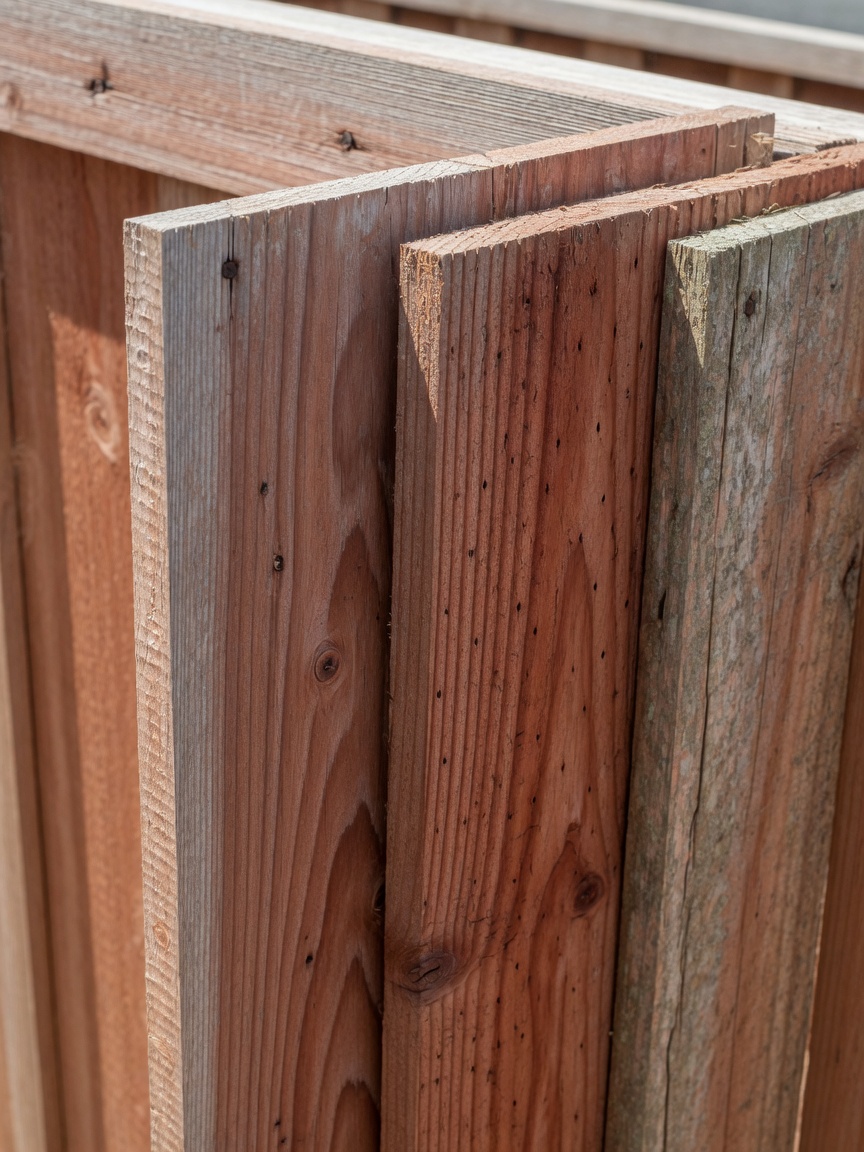
The second half of "private" is construction. A privacy panel is built so daylight does not pass between the boards. There are a few common ways builders do this, and each one behaves differently as the wood ages in a humid climate.
The Common Panel Patterns
- Board-on-board. Boards are overlapped so each gap is covered by the board behind it. This stays private even after wood shrinks a little in dry weather, which is why it is a popular request for a fence meant to last.
- Side-by-side (stockade-style) boards. Boards are butted tightly together with no overlap. It uses less material but can open small gaps as the wood dries and moves.
- Solid vinyl or composite panels. Manufactured panels arrive as one continuous face with no gaps to begin with, so privacy does not depend on how tightly boards were set.
The finished side and which way it faces
Board-and-rail fences have a smooth "finished" side and a framed side that shows the rails. Which way that finished side faces is often set by an HOA and, absent a rule, is worth deciding on purpose rather than by accident.
Wood moves, so plan for it
Even well-dried lumber shrinks and swells with the seasons here. A board-on-board pattern hides that movement, while a tight side-by-side pattern can reveal thin daylight gaps once the boards give up a little moisture.
Coastal note
A deliberate small gap between boards lets storm wind pass through instead of pushing against a solid wall. That is a real trade on this coast, where a tall solid fence acts like a sail, and it is one we walk through with you before we build.
Wood vs. Vinyl for Privacy
Once you have decided you want privacy, the next fork is the material, and for privacy fences it usually comes down to wood versus vinyl. Both reach full privacy at the same height, so the decision is really about look, upkeep, and how each material handles a humid, salt-touched climate.
The Case for Wood
Wood is the classic privacy material: warm, easy to build tall, and simple to repair one board at a time. It is a natural material, so it needs upkeep: sealing or staining, and the occasional replaced board over the years. On a humid coast, that upkeep matters more than it does inland. If a wood privacy fence is what you picture, our wood and privacy fence page is the place to start a quote.
The Case for Vinyl
Vinyl panels arrive solid and stay that color without staining, and they do not rot in humid air, which is a genuine advantage in this climate. The trade is a higher material cost up front and a manufactured look rather than a natural-wood one. Both can deliver full privacy at the same height; the choice is really about the look you want and how much maintenance you are willing to do.
HOA and Neighbor Notes
A privacy fence is one of the most commonly regulated things you can build, because it changes what everyone around you sees. Before you commit to a height or a style, two conversations are worth having.
Check the HOA First
Many communities cap fence height, restrict materials or colors, and specify which way the "finished" (smooth) side must face, usually toward the neighbor. Reading those rules before you fall in love with a design saves an expensive change order later.
Know Where the Line Actually Is
Know where your property line actually is, so the fence sits on your land and not an inch over it. Getting this settled before installation avoids the single most expensive privacy-fence mistake, which is building a fence you then have to move.
What a Privacy Fence Has to Survive Here
A privacy fence on the Florida Panhandle lives a harder life than the same fence built inland, and the reasons all trace back to being close to the water. Understanding them is what separates a fence that still screens your yard in ten years from one that leans, grays, or gaps early.
Wind Load on a Solid Wall
Privacy is the one goal that works against storm survival, because the very thing that makes a fence private, a tall solid face, is the thing that catches the most wind. That does not mean you cannot have privacy here. It means the posts and footings under a privacy fence have to be set for the wind the panel will catch, which is a bigger job than an open fence asks for.
Humidity, Salt, and Sandy Footings
Humid, salt-touched air is harder on an unsealed wood fence than dry inland air, and the sandy soil common here holds posts more loosely than clay does. Neither is a dealbreaker. Both are reasons the footing and the finish deserve more attention on a coastal privacy fence than a national how-to guide would ever mention.
Which Privacy Fence Is Right for You?
The honest answer is that "privacy fence" describes a goal, and several materials reach it. If you want warmth and easy board-by-board repairs, wood is the traditional pick. If you want a solid panel that shrugs off humidity with little upkeep, vinyl earns its higher price. If wind load is your worry, a slightly gapped design or an open style trades some privacy for storm resilience. There is no universally correct choice, only the one that fits your yard, your climate, and your tolerance for maintenance.
Getting a Privacy Fence Quote
Because a privacy fence is defined by height and construction rather than a fixed product, the word "privacy fence" can describe genuinely different fences, with different heights, board patterns, and post depths. That is why we walk the property before we quote. Tell us what you want the fence to do, and we will spec the height, the panel style, and the footing that hold up here. As a fence company in Gulf Breeze, FL that builds for this coast, we can tell you which privacy style survives salt air and storm season, and give you a real number for it.
Talk to us
Start on our fence company in Pensacola, FL or send us a quote request.
Wood & privacy
See the privacy panel styles we build: wood & privacy fences.
Not sure yet?
Read the honest tradeoff between materials: wood vs. vinyl fencing.