Gulf Breeze sits on a narrow peninsula between Pensacola Bay and Santa Rosa Sound, with water on both sides. That geography is a big part of what makes it a beautiful place to live, and it is also why fences here face a challenge inland fences never do. The salt-laden air that drifts off the water works on metal every single day, quietly, whether or not a storm is coming. Understanding that slow attack is the key to choosing a fence that still looks good and works a decade from now. This guide explains it plainly.
What Salt Air Actually Does to Metal
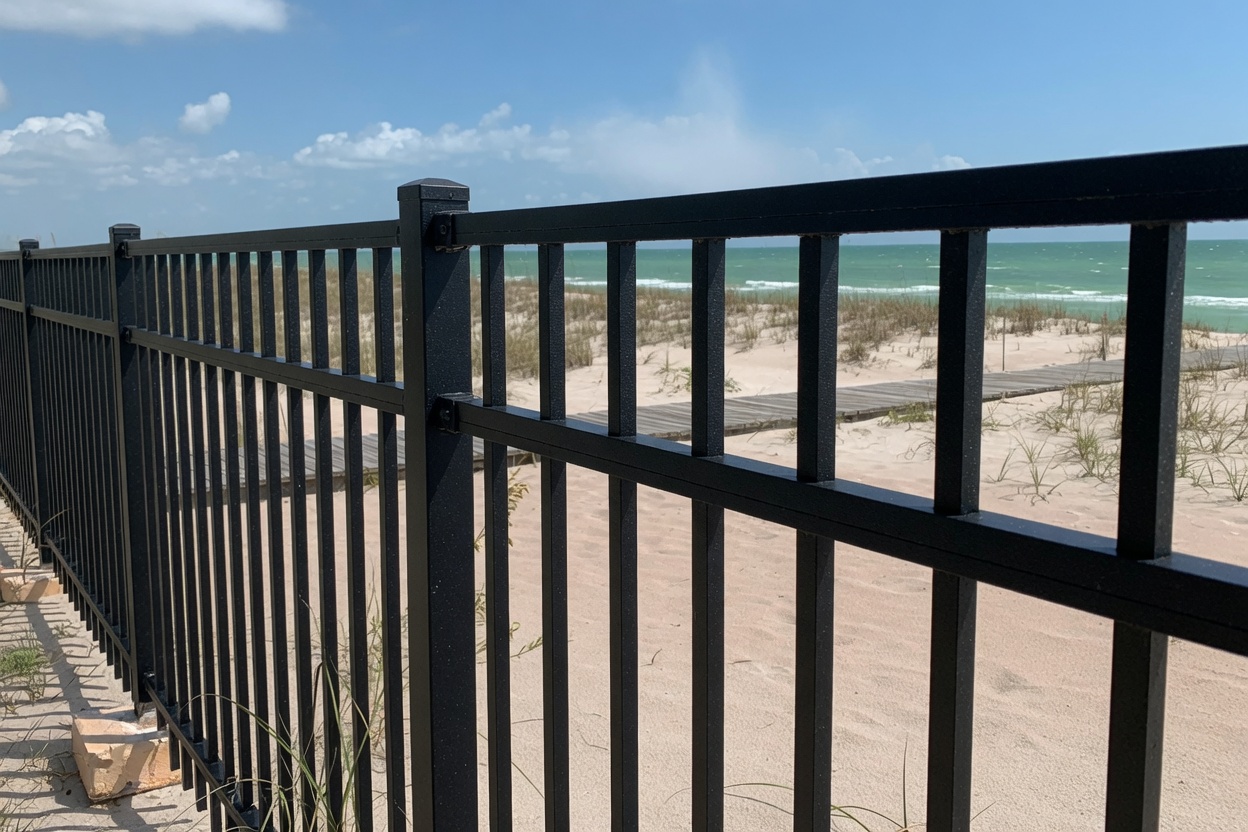
Corrosion is the gradual breakdown of metal through a chemical reaction with its environment, and on steel we call the most familiar form of it rust. Salt is a catalyst: salt-laden coastal air dramatically speeds up the reaction, so metal that might last a long time inland can degrade far faster within reach of the water. The corrosion does not usually announce itself all at once. It starts small, a rusty streak at a fastener, a rough patch at a hinge, and works from there. On the coast, that process is running on your fence every day the wind blows off the bay or the sound.
Why Salt Speeds It Up
Salt does not attack metal directly so much as make the attack easier. It draws and holds moisture on the surface and helps that moisture carry the tiny electrical currents that corrosion runs on. The result is that the same reaction that might take many quiet years inland runs far faster within reach of the water.
Humidity keeps the reaction alive
The Panhandle's near-constant humidity means the surface of a metal fence rarely dries out completely, so the salt has moisture to work with almost all the time. Wet metal and salt together are the whole problem in one sentence.
Distance from the water matters
The closer the lot sits to open water, the more salt the air carries and the faster metal degrades. A fence a block from the sound lives a harder life than one the same age a few miles inland.
Good to know
Salt does not need a storm to reach your fence. An ordinary onshore breeze carries it inland every day, which is why the damage is steady rather than seasonal.
Why Bare Steel Struggles Here
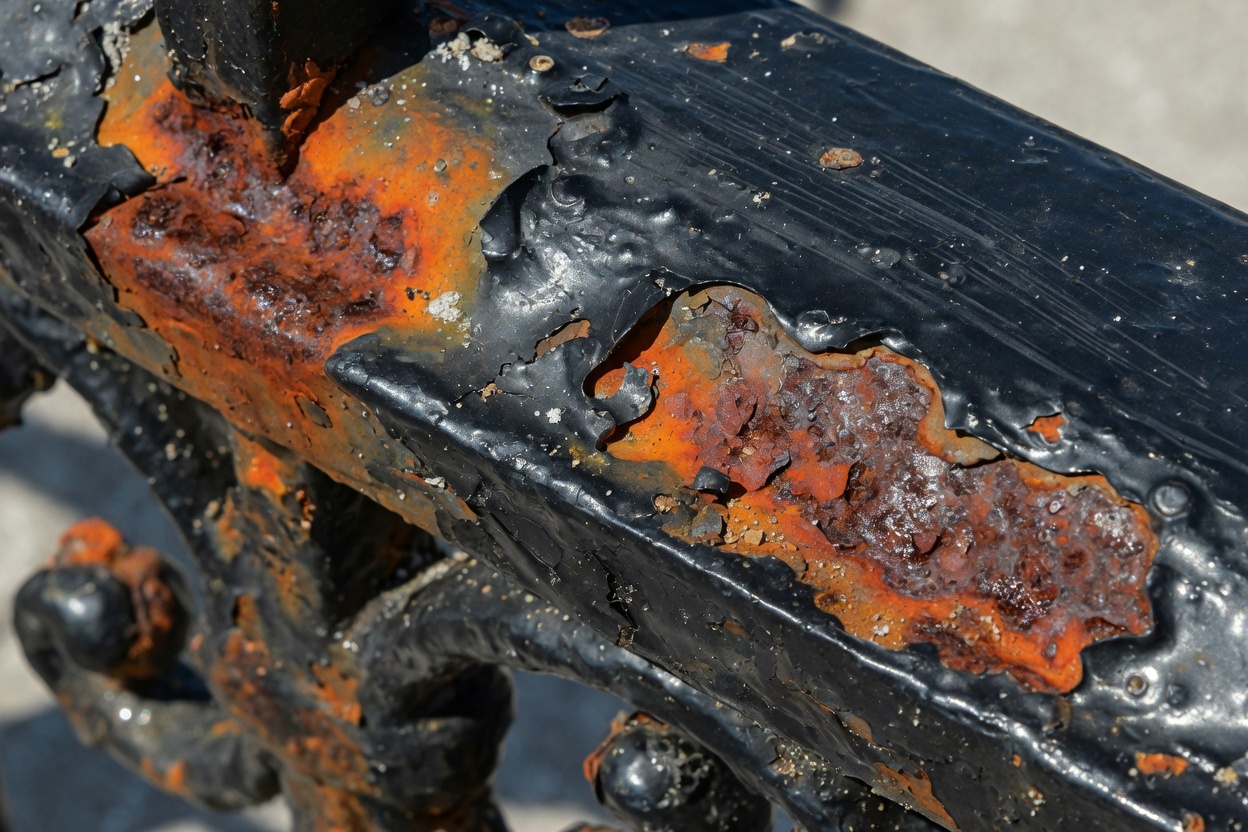
Traditional steel and iron fencing is strong, but steel and salt air are a bad match over time. Left bare or lightly coated, steel corrodes, and the failure tends to show up first at the small, hardworking parts, meaning fasteners, hinges, latches, and welds. A fence can have perfectly sound rails and still fail because a corroded hinge let a gate tear loose. That is the coastal pattern: it is rarely the big pieces that go first; it is the small metal ones that live in the weather.
What Galvanization Does, and Its Limits
The common defense for steel is galvanization, a zinc coating bonded to the steel that corrodes in the steel's place and slows rust considerably. It is why galvanized chain link and galvanized hardware hold up far better than bare steel outdoors, and it genuinely helps on the coast. But galvanization is a barrier, not immunity: once the zinc layer is scratched, worn, or eventually consumed, the steel underneath is exposed again, and salt air accelerates that timeline. Galvanized steel is a real improvement here; it is just not the end of the corrosion conversation the way a rust-resistant material is.
Why Aluminum Is Different
Aluminum answers the coast's corrosion problem at the material level rather than with a coating. Aluminum does not rust the way steel does; instead, it forms a thin, stable surface layer that naturally protects the metal underneath, so it holds up in salt air where steel struggles. Quality aluminum fencing also carries a durable factory finish on top of that. The result is an ornamental metal fence that keeps its look near the water without the rust battle. It is not that aluminum is invincible, because nothing outdoors is, but its baseline resistance to coastal corrosion is fundamentally better than bare or coated steel, which is exactly why it comes up again and again for waterfront and near-water lots.
Protection Built Into the Metal
The important distinction is where the protection lives. On steel, the defense is a coating sitting on top of a metal that wants to rust, so a scratch is a real vulnerability. With aluminum, the resistance is a property of the metal itself, and the surface layer that protects it re-forms if it is disturbed. That is a fundamentally sturdier arrangement in a climate that is always working on the finish.
The factory finish adds looks and life
On top of that natural resistance, quality aluminum fencing carries a durable powder-coat finish that handles the color and adds another layer of protection. It is a fence built for weather from the start rather than one you are constantly defending against it.
The Wind Bonus
Aluminum answers the coast's second problem at the same time. Ornamental aluminum is built as open pickets rather than a solid wall, so wind passes through it instead of catching it like a sail. On an exposed lot, that open design takes far less storm load than a tall solid panel. So the same material that best resists the everyday salt-air attack also handles the occasional big blow better than a solid privacy fence: two coastal problems, one answer. That combination is the core of why aluminum is the near-water default.
The Detail That Quietly Decides Everything: Hardware
Even with a corrosion-resistant fence, the smallest parts still deserve attention, because they are always the first to fail in salt air. Ask what the fasteners, hinges, and latches are made of and whether they are coated or corrosion-rated. Aluminum and properly coated hardware hold up; bare or lightly-coated steel hardware is the weak link that rusts first and takes a gate down with it. It is an unglamorous line item, but on the coast it is the difference between a fence that lasts and one that fails at the hinge while the rest of it still looks fine.
Where Aluminum Fits Best
The material's twin strengths, corrosion resistance and an open wind-friendly design, line up neatly with a few specific coastal jobs where it tends to be the obvious pick.
Pool Barriers
A pool fence has to close and latch itself reliably for years, which depends entirely on hardware that keeps working. Aluminum's rust resistance and clean vertical pickets make it a common pool-barrier choice near the water, where salt would be quietly working on a steel gate the whole time. Explore it on our aluminum and pool fence page.
Waterfront and View Lots
On a lot with a view worth keeping, an open aluminum fence marks the boundary without walling off the water, and it does it without the rust battle a steel or iron fence would fight in that exact spot. It is the fence that lets the view stay the view.
Is Aluminum Right for Your Lot?
The closer you are to the water, the stronger the case for aluminum. On a true waterfront or near-water lot, its corrosion resistance and wind-friendly open design are hard to argue with, and it is the common recommendation for a reason. Further from the water, other materials become reasonable again and the choice opens up to look and budget. If a rust-free coastal metal fence, or a pool barrier that resists salt air, is what you are after, aluminum is the material built for this environment. Start on our aluminum and pool fence page.
Getting a Coastal-Smart Quote
Our value here is not just the fence. It is knowing which materials and hardware have actually survived years of salt air on lots like yours. Show us your property once, note how close you are to the water, and we will price a fence built for it. As a fence company in Gulf Breeze, FL, we live with this corrosion problem every day and can spec the metal and hardware that hold up, the kind of coastal read a national comparison chart cannot give you.
Talk to us
Start on our fence company in Pensacola, FL or send us a quote request.
Aluminum & pool
Rust-resistant coastal metal we install: aluminum & pool fences.
Aluminum vs. iron?
Weight, rust, and cost compared: wrought iron vs. aluminum.