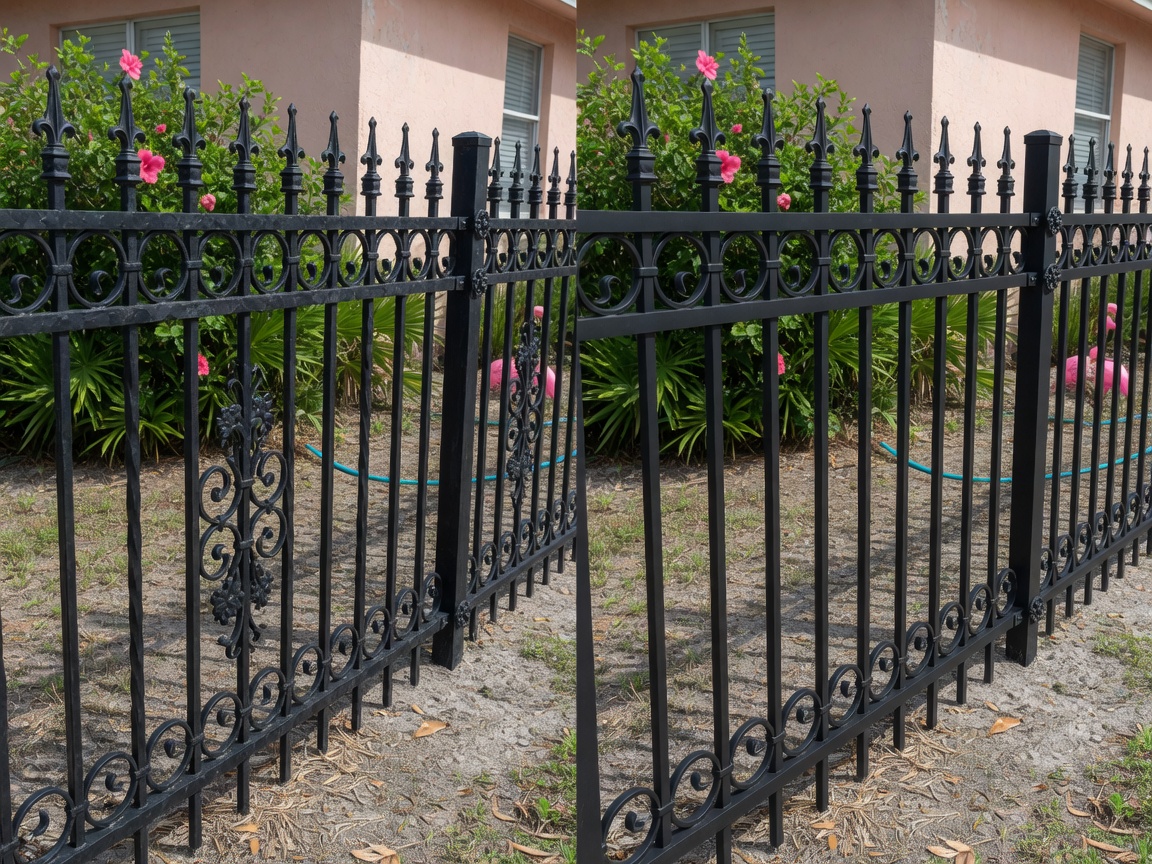
When people picture an elegant metal fence, with vertical pickets, ornamental tops, and an open airy look that frames a yard without walling it off, they are picturing either wrought iron or aluminum. From across the street, a well-built aluminum fence and a traditional iron one can look nearly identical. Up close and over the years, though, they are different animals. If you are choosing between them, especially on the coast, a few honest distinctions will point you to the right one.
The Look: Close Cousins
Start with the good news: aesthetically, these two are close cousins. Both are built as open pickets rather than solid panels, both suit ornamental styling with decorative tops and scrollwork, and both give you that see-through, garden-framing look that solid fences cannot. Traditional wrought iron carries a certain hand-forged character and heft that purists love. Modern aluminum is made to echo that same ornamental style closely enough that most passersby never tell the difference. If pure appearance were the only factor, it would be a coin toss, which is exactly why the practical differences decide it.
Weight and Strength
This is the first real fork. Wrought iron is a heavy, dense metal, genuinely strong and substantial, with a solidity you can feel. Aluminum is a fraction of that weight while still being plenty strong for a residential fence.
The Weight Difference Cuts Both Ways
Iron's mass gives it a robust, immovable feel and can shrug off impacts that might dent aluminum. Aluminum's lightness makes it easier to handle and install, and it puts less strain on gate hinges and posts over time. For most homes, aluminum is more than strong enough; for a setting that specifically wants maximum heft, iron has the edge.
Where weight shows up first: the gate
A heavy iron gate works its hinges and posts harder every time it swings, and on the coast a hinge under constant strain is a hinge that can bind or wear sooner. A lighter aluminum gate is gentler on its own hardware over the years.
Handling on install day
Aluminum's lightness also makes it faster and safer to set, especially on a long run, which is part of why it tends to cost less to install than iron of the same design.
Good to know
Strong enough is strong enough. For a residential yard or pool barrier, aluminum's strength is rarely the limiting factor, so the choice usually turns on rust and cost rather than raw toughness.
Rust: The Deciding Factor on the Coast
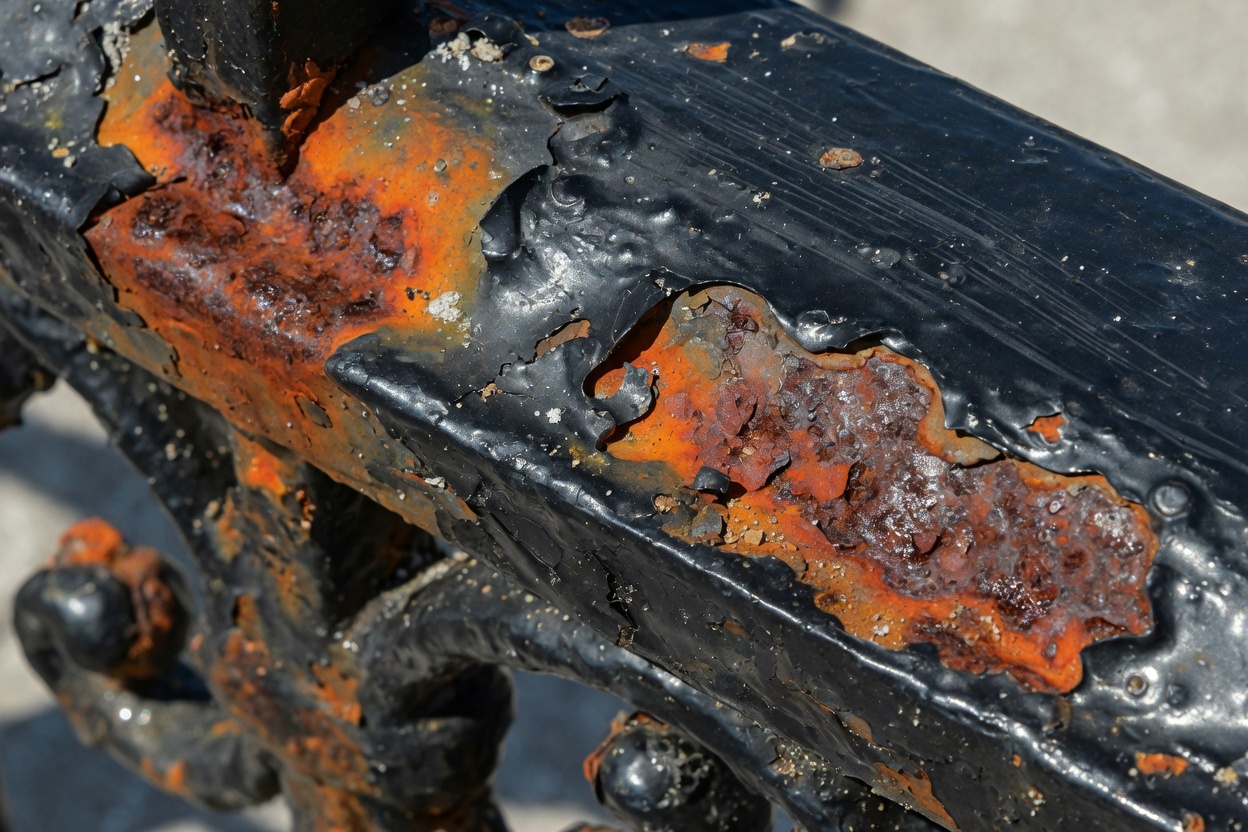
Here is where the comparison stops being close, and it matters enormously near the water. Wrought iron is iron, and iron rusts. Without diligent upkeep, meaning priming, painting, and touching up any chips, iron is prone to corrosion, and salt air accelerates that process. On a coast like this one, an unmaintained iron fence can start showing rust streaks and rough spots faster than owners expect.
Why Aluminum Sidesteps the Problem
Aluminum, by contrast, does not rust the way iron does; it forms a stable protective surface layer and carries a durable finish, so it holds up in salt air with far less fuss. The defense is built into the metal rather than painted onto it, which matters in a climate that is always working on a finish. For a waterfront or near-water lot, this single difference is usually enough to settle the decision in aluminum's favor.
Where iron rusts first
As with any metal fence here, the small hardworking parts go first: welds, joints, the base of pickets where water sits, and the hardware. A fence can have sound rails and still develop rust at exactly the spots that are hardest to keep painted.
Maintenance Over the Years
The rust difference drives a maintenance difference. A wrought iron fence is a commitment: to keep it looking its best and to hold off corrosion, it wants periodic sanding, priming, and repainting, and prompt attention to any spot where the finish is compromised, more often near salt air. An aluminum fence asks for very little: an occasional wash, and that is largely it. If you love the ritual of maintaining classic ironwork, that upkeep is part of the appeal. If you would rather set the fence and forget it, aluminum is the low-effort choice by a wide margin.
The Coastal Upkeep Reality
Inland, an iron fence's paint schedule is manageable. On a lot within reach of salt air, that schedule tightens, because the finish is being tested every day rather than every season. What reads as a pleasant occasional chore in a dry climate can become a recurring race against rust here, which is worth being honest with yourself about before you choose iron near the water.
Styling and Design Options
Because both fences are built as open pickets, both open the door to ornamental detail that a solid fence simply cannot offer. This is where a metal fence stops being just a boundary and becomes part of the look of the property.
Picket Tops and Scrollwork
Decorative picket tops, finials, and scroll detail are available in both materials, and modern aluminum is made specifically to echo the traditional ironwork look closely enough that most passersby never tell the difference. If a particular ornamental style is what you are after, both can usually reach it.
Color and Finish
Both commonly come in black, and both can be had in other tones. The practical difference is that aluminum's color is a durable factory finish designed to last, while iron's color is paint you are responsible for maintaining, especially near salt air where it is tested constantly.
What Drives the Cost Difference
On cost, the pattern, not a dollar figure, which moves with the market and the job, is that traditional wrought iron typically runs higher than aluminum. Iron is a heavier, often more labor-intensive material, and genuine ornamental ironwork can involve custom fabrication that adds to the price. Aluminum's lighter weight and manufactured components generally make it the more budget-friendly of the two, on top of costing less to maintain over the years. So aluminum tends to win on both the upfront and the long-run cost, while iron commands its premium for heft and old-world character. Have us quote your specific layout in both if you are torn, since the actual gap depends on your yard and the design.
Which Should You Choose?
Choose wrought iron if you want maximum weight and that hand-forged, traditional character, you are drawn to the classic look, and you do not mind the upkeep to keep rust at bay. Choose aluminum if you want the same ornamental appearance with dramatically less maintenance, better resistance to coastal salt air, and a lower cost both up front and over time. For most Gulf Coast homeowners, and especially for anyone near the water or fencing a pool, aluminum's rust resistance and easy upkeep make it the practical winner, which is why it is the metal fence we most often point coastal customers toward. Explore it on our aluminum and pool fence page.
Getting the Right Metal Fence Quoted
The best way to decide is to see real numbers for your exact fence in the material you are leaning toward. Show us the yard once, and mention how close you are to the water, so we can price it and tell you honestly which metal makes sense for your lot. As a fence company in Gulf Breeze, FL that installs both, we know how each has actually held up against salt air here, and can steer you to the one you will be glad you chose in ten years.
Talk to us
Start on our fence company in Pensacola, FL or send us a quote request.
Aluminum & pool
The coastal metal pick we install: aluminum & pool fences.
Why salt air matters
The corrosion angle in full: aluminum & salt air.