Chain link never wins a beauty contest, and it does not try to. It is the fence you choose when the job is to enclose an area securely and affordably: a yard for the dog, a boundary around a lot, a work site that needs to be locked down. Chain-link fencing is a woven mesh of steel wire hung between posts, and understanding a few basics, the coating, the gauge, the height, and whether you add slats, is enough to make you a smart buyer. This guide walks through each one in plain terms.
Galvanized vs. Vinyl-Coated
The first real choice is the finish on the wire, and it comes down to two options that differ in both looks and how long they hold up in salt air.
Galvanized: The Standard Choice
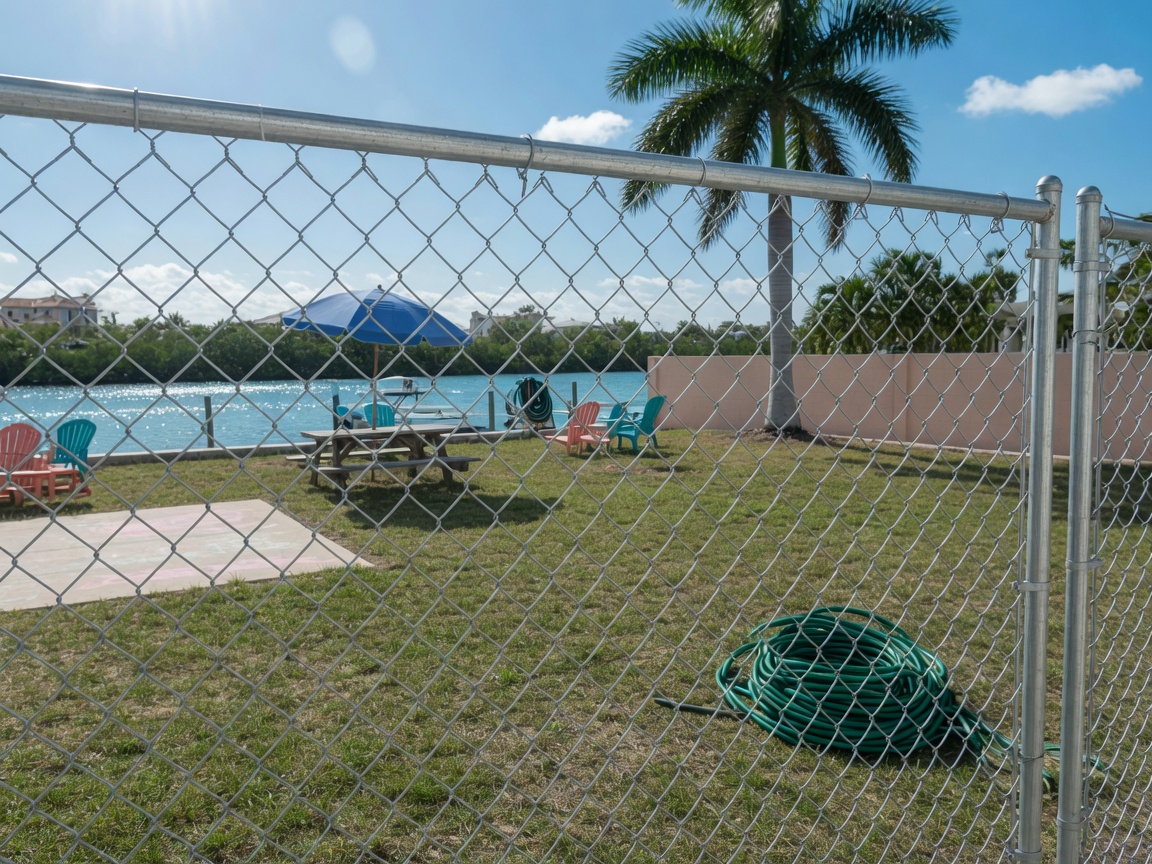
Galvanized chain link is steel mesh coated in zinc through galvanization. The zinc layer slows corrosion, which is why plain galvanized chain link is the standard, economical choice and holds up reasonably well outdoors. It has the familiar bright, silvery metallic look.
The zinc is a barrier, not immunity
Galvanization buys time against rust, but it is a coating that eventually wears, and salt air speeds that clock up. It is a real defense here, just not the last word in corrosion resistance.
Vinyl-Coated: The Coastal Upgrade
Vinyl-coated chain link takes that galvanized wire and adds a bonded plastic coating over it, usually in black, green, or brown. The coating does two things: it adds a second barrier against corrosion on top of the zinc, and it makes the fence visually recede, because a black vinyl-coated fence almost disappears against a tree line, where a bright galvanized one stands out. It costs a bit more than bare galvanized.
Why the extra barrier matters near the water
On the coast, where salt air accelerates corrosion, that second coated barrier over the zinc is worth weighing. It is a modest upcharge that buys a meaningful head start against the one thing that shortens a metal fence's life here.
The disappearing-fence bonus
Homeowners often choose black vinyl-coated less for corrosion and more because it visually recedes, letting the yard and landscaping read as the view instead of the fence.
Good to know
If the coating is ever nicked down to bare steel, that spot can start to rust, so a coated fence still benefits from an occasional look-over.
Gauge: What the Wire Thickness Means
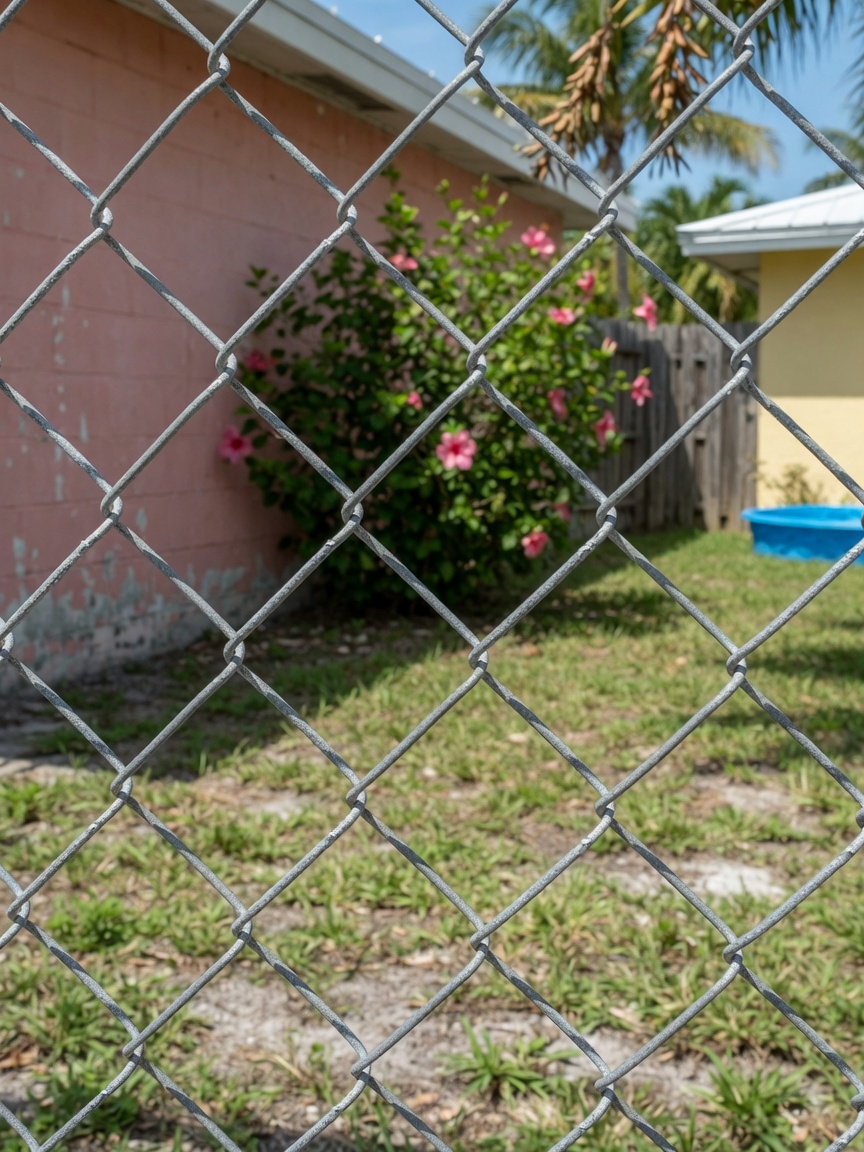
"Gauge" describes how thick the wire is, and it is worth knowing the direction rather than memorizing numbers: with wire gauge, a lower number means a thicker, stronger wire. Residential fences use a lighter wire than commercial or security fences, which use heavier, thicker mesh to take more abuse.
Matching Gauge to the Job
We recommend a gauge based on what the fence is for, since a backyard dog run does not need the same wire as a commercial yard. Rather than fixate on a spec number, tell us the job and we will match the gauge to it. A heavier wire on a small residential run is money spent where you will not notice it, while too light a wire on a hard-use enclosure is a false economy.
Height and Common Sizes
Chain link is built at a range of heights depending on the use. Residential yard fences are commonly on the shorter end, tall enough to contain a dog and mark the boundary, while commercial, security, and sports enclosures go taller. The right height depends on what you are keeping in or out, your sight-line needs, and any local code or HOA limits, which can cap fence height. As with any fence, confirm the allowed height for your property before you commit to a number.
Adding Privacy: Slats and Screens
The usual knock on chain link is that it offers no privacy, since you can see straight through the mesh. There is a common fix: privacy slats, which are strips (often vinyl or aluminum) woven vertically through the mesh to block the view. They turn an open chain link fence into a semi-private one at a fraction of the cost of a solid privacy fence. Fabric or mesh privacy screens attached to the fence do a similar job. Neither makes chain link as private as a solid wood or vinyl panel, but for a lot of yards the slat option is a smart middle ground on cost.
What Chain Link Is Best For
Chain link earns its keep on specific jobs:
- Dog runs and yard containment. Durable, see-through so you can watch pets, and affordable to enclose a large area.
- Boundary and security fencing. When the goal is to define and secure a lot rather than screen it, chain link does it for less than any solid material.
- Commercial and work sites. Heavier-gauge chain link is the default for securing yards, equipment, and commercial property.
- Temporary fencing. Freestanding chain link panels lock down a construction site or event area for a limited time, then come down.
- Large areas on a budget. When you need to fence a lot of linear footage and privacy is not the point, chain link covers ground cheaply.
Maintenance and Coastal Life
Chain link is close to the lowest-maintenance fence there is, which is part of why it endures on so many properties. There is no staining, no sealing, and no board to replace. On the coast, the one thing worth watching is corrosion at any spot where the coating is compromised.
What Salt Air Does to the Mesh
Salt air works on any exposed steel over time, so a scratch through the zinc or a nick in a vinyl coating is where rust can start. A vinyl-coated fence gives you a second barrier for exactly this reason, and an occasional rinse to knock the salt off the mesh helps either finish last longer near the water.
What Drives a Chain Link Quote
Chain link is the value leader in fencing, but the price still moves with a handful of choices, and knowing them makes you a sharper buyer.
The Main Cost Levers
Height and gauge set the base, coating adds a step, and gates are the labor-heavy part as they are on any fence. Slats or privacy screens add material. The total length matters most of all, which is exactly why chain link wins when you need to enclose a large area affordably.
Chain Link and Storm Season
Here is chain link's quiet superpower on the Gulf Coast: because it is mostly open mesh, wind blows straight through it. There is very little solid surface for a gust to push against, so chain link tends to be one of the more storm-tolerant fences per dollar, the opposite of a tall solid privacy fence, which acts like a sail. Adding privacy slats reduces that advantage somewhat, since the slats give the wind more to catch. If wind survival on an exposed lot is a priority and privacy is not, open chain link is genuinely hard to beat.
The Honest Trade-Offs
Chain link's strengths, low cost, durability, wind tolerance, and easy visibility, come with the obvious trade: it is utilitarian and offers no privacy on its own. It will not give you the look of a wood or ornamental fence, and no amount of coating changes that it reads as a functional fence. For the right job, that is exactly what you want; for a showcase front yard, it usually is not. Matching the material to the job is the whole game.
Getting a Chain Link Quote
Because chain link pricing swings with gauge, height, coating, gates, and slats, a real quote for your specific layout beats any online estimate. The most useful thing is to tell us the job, what you are enclosing and why, and we will spec the mesh and price it. Our chain link fence page is where to start, and as a fence company in Gulf Breeze, FL we can tell you whether galvanized or vinyl-coated has held up better against salt air on lots like yours.
Talk to us
Start on our fence company in Pensacola, FL or send us a quote request.
Chain link
We spec and price your run: chain link fences.
Want privacy instead?
What actually makes a fence private: privacy fences explained.